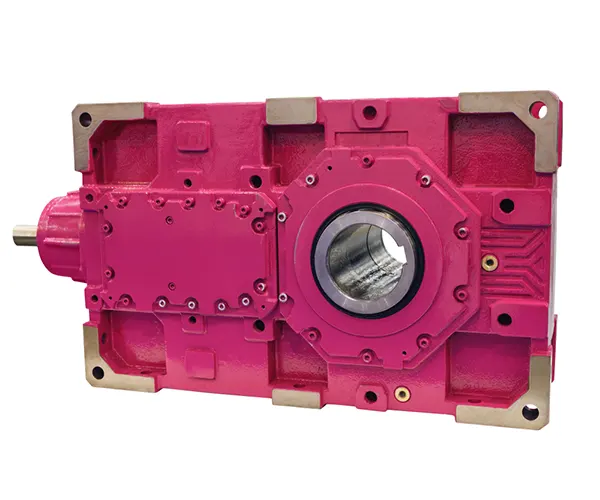
Gearboxes, also known as gear reducers or transmission systems, are mechanical devices designed to control the speed, torque and direction of rotational motion. They consist of a series of gears of different sizes and arrangements and enable the conversion of input energy into a desired output. Gearboxes are used in a wide range of applications, from automotive transmissions to industrial machinery and robotics. The primary purpose of a gearbox is to improve efficiency and performance by matching the speed and power requirements of a driven load with those of the power supply. By selecting specific gear ratios, gearboxes can increase torque while reducing speed (gear reduction) or increase speed while reducing torque (gear multiplication). This versatility makes gearboxes essential for optimizing the functionality of various mechanical systems, allowing machines to operate at the most effective and efficient levels in a variety of industries.